
Vowels in Pitman Shorthand: An In-Depth Guide
Vowels in Pitman Shorthand
Pitman Shorthand, developed by Sir Isaac Pitman in 1837, is a system of shorthand that relies on phonetics to transcribe spoken words quickly and efficiently. One of the critical aspects of mastering Pitman Shorthand is understanding how vowels are represented. This guide provides an in-depth look at vowels in Pitman Shorthand, their placement, and their significance in the system.
Basics of Vowel Representation
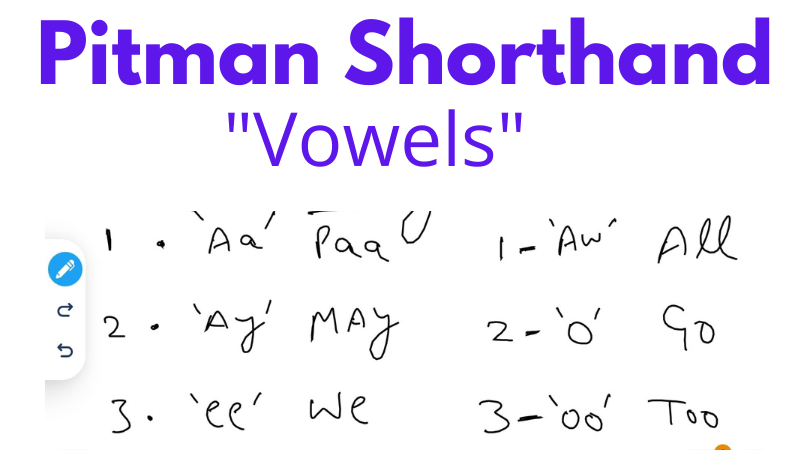
In Pitman Shorthand, vowels are represented by dots and dashes placed in specific positions relative to the consonant strokes. The position of these vowel marks (either before, after, or through the consonant stroke) indicates whether the vowel sound comes before, after, or simultaneously with the consonant. The system categorizes vowels into three classes based on their length and sound: long vowels, short vowels, and diphthongs.
Long Vowels
Long vowels are represented by heavy dots or dashes and are placed close to the consonant strokes. There are six primary long vowel sounds in Pitman Shorthand:
1. E (as in 'meet'): A heavy dot at the beginning of the stroke.
2. A (as in 'mate'): A heavy dot at the middle of the stroke.
3. AH (as in 'mart'): A heavy dot at the end of the stroke.
4. AW (as in 'law'): A heavy dash at the beginning of the stroke.
5. O (as in 'boat'): A heavy dash at the middle of the stroke.
6. OO (as in 'food'): A heavy dash at the end of the stroke.
Short Vowels
Short vowels are indicated by light dots or dashes, also placed relative to the consonant strokes. There are six primary short vowel sounds:
1. I (as in 'bit'): A light dot at the beginning of the stroke.
2. E (as in 'bet'): A light dot at the middle of the stroke.
3. A (as in 'bat'): A light dot at the end of the stroke.
4. O (as in 'not'): A light dash at the beginning of the stroke.
5. U (as in 'but'): A light dash at the middle of the stroke.
6. OO (as in 'foot'): A light dash at the end of the stroke.
Vowel Placement
The placement of vowels in Pitman Shorthand is crucial for indicating the correct pronunciation and meaning of words. Vowel signs can be positioned before, after, or through the consonant stroke, with the specific position providing additional context:
First Position: Vowels placed at the beginning of the stroke.
Second Position: Vowels placed in the middle of the stroke.
Third Position: Vowels placed at the end of the stroke.
For example, placing a heavy dot at the beginning of the consonant stroke indicates the long 'E' sound as in "meet," whereas placing a heavy dot at the end of the stroke signifies the 'AH' sound as in "mart."
Context and Clarity
In practice, Pitman Shorthand relies on the context and clarity of vowel placement to distinguish between words that might otherwise look similar. Mastery of vowel representation is essential for both writing and reading shorthand accurately, ensuring that each word is transcribed and interpreted correctly.